Culture, Wellbeing & BioDiversity
Positioning dark skies as a doorway into heritage, health and nature.

The Value of Dark Skies
The growth of dark sky initiatives in county Mayo is an example of how environmental awareness, sustainability and rural development can be driven by the work of civil society. Experiencing a natural night sky is becoming a rare experience, and is much sought after by urban dwellers in particular, who flock to remote places to experience the growing trend of dark sky tourism (also known as noctourism). This provides a welcome economic boost for local hospitality businesses during the quieter times in winter, when the skies are at their darkest and best. Dark Sky protection is also now contributing to meaningful local employment as well as being an economic boost to the off-peak tourism season and we are also starting to see young professionals moving into the area to live and work under naturally dark skies. Protecting and promoting dark skies aligns with the objectives of least 12 of the UNs Sustainable Development Goals. We were proud to see this recognised with the recent appointment of Dark Sky Ireland as a Sustainable Development Champion 2025-27.
Culture and Heritage
For millennia, a starry night sky has inspired artists, philosophers, musicians and scientists. Our ancestors used the night sky as a seasonal clock, governing planting or harvesting times by the return of familiar constellations. It is said that astronomy is the oldest and most beautiful of all sciences and ancient civilisations used the celestial objects to map out constellations of stars, weaving stories, myths and legends into the patterns they saw. Ireland’s astronomical heritage is etched into the landscape with stone circles and passage tombs such as Newgrange, the most famous ancient observatory. The connection of skyscape and landscapes are considered important cultural assets at an international level as highlighted by UNESCO’s Portal to the Heritage of Astronomy
Light Pollution and its effects
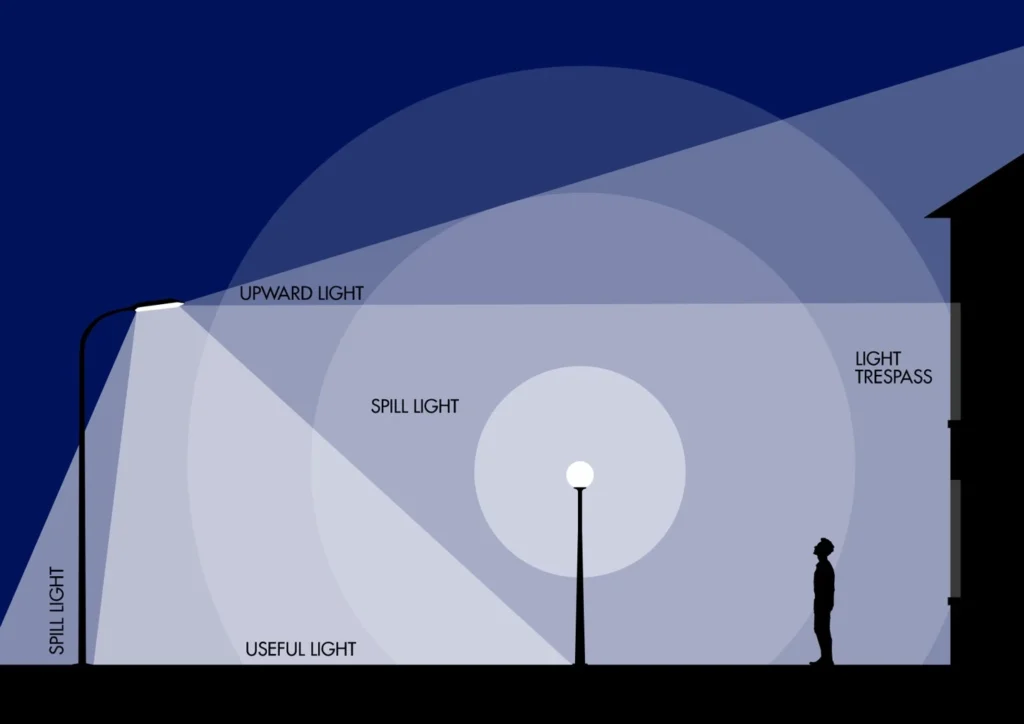
Light pollution is the excessive or misdirected use of artificial light at night. It harms human wellbeing, wastes energy, disrupts wildlife, and obscures the natural night sky.
It is commonly classified into four types: glare, which causes visual discomfort; skyglow, the orange or white haze over towns and cities that reflects wasted energy and increased CO₂ emissions; obtrusive light, where light spills into areas it is not needed, such as neighbouring properties; and clutter, caused by poorly planned, overly bright or competing light sources.
Over the past 25 years, light pollution in Ireland has increased significantly. The widespread use of blue-rich LED lighting is of particular concern, as blue light scatters more widely—especially in damp or cloudy conditions—intensifying glare from streetlights, sports facilities and modern vehicle headlights.
Wellbeing and the Night Sky
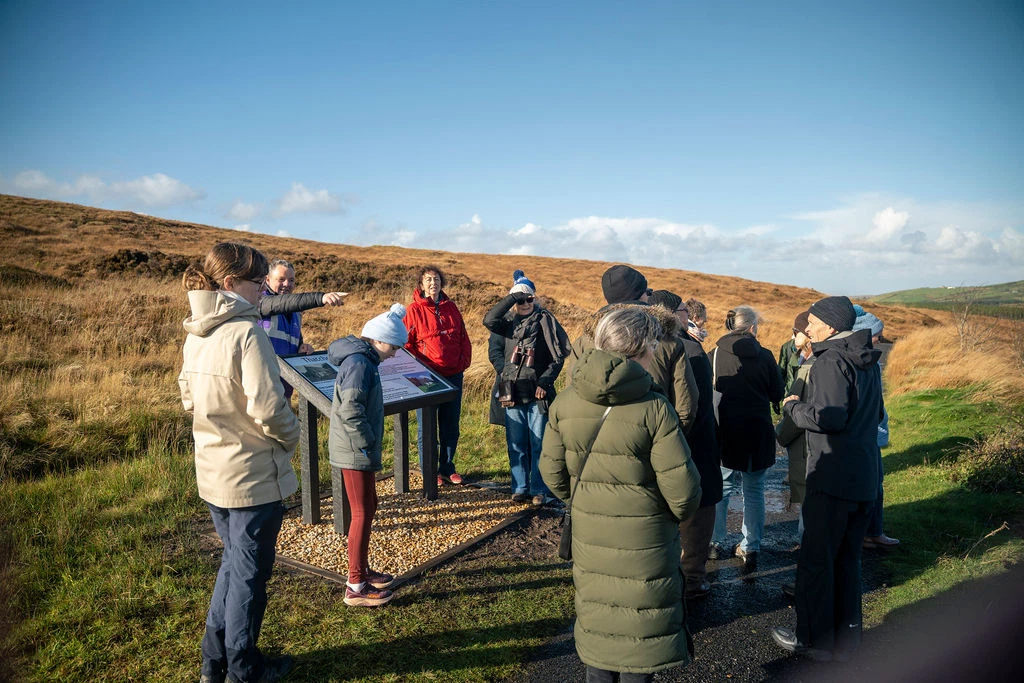
The simple act of stargazing is part of what makes us human and gives us a deeper connection to our place in the cosmos. Research has found that that experiencing the wonder and awe of a truly dark sky can be good for us in both body and spirit. In contrast to the detrimental effects of being exposed to excessively bright light, natural darkness helps to restore our circadian rhythm and provides us with opportunities to practice mindfulness and wellbeing activities in a tranquil setting. Mayo Dark Sky Park runs weekly dark sky walks during the Winter season, providing safe and accessible guided walks for all abilities.

Biodiversity
All living things depend upon Earth’s daily cycle of night and day to govern biological processes, behaviours and reproductive systems. Light pollution is an environmental stressor that disrupts these natural rhythms and the behaviours of flora and fauna. It has been found to be a significant driver in biodiversity loss, causing widespread impacts to pollinators, mammals, migratory birds and aquatic species. Most native Irish mammals are active at twilight or are nocturnal and use the cover of darkness to feed or avoid predation, so reducing light pollution can help maintain their populations. The natural darkness found in Mayo Dark Sky Park supports ecosystems and is an important habitat for nocturnal wildlife.
Keep up to date
Sign up to be the first to know when tickets go on sale and the 2026 programme is revealed — plus early news and event highlights direct to your inbox.