
Stargazing

Whether you’re a curious first-time stargazer or a seasoned sky-watcher, explore our top locations, seasonal sky guides and event nights to plan your perfect night under the stars.

Stargazing Locations

Our Top Tips

Remember, it takes at least 20 minutes for your eyes to become dark adapted and this is important for viewing faint objects (like galaxies and nebulae). You lose your night vision instantly if someone shines a white light – our eyes are much less sensitive to red light, so we always recommend red light torches. 

Most smart phones have red light settings – check yours out beforehand to familiarise yourself – or check our handy tip.

The bottom line is:
Please use your common sense and best endeavours to minimise white light (particularly full headlights) without jeopardising your own or anybody else’s safety.

TOP TIP - If you are using a standard torch, try covering it with a red balloon!
Stargazing in Mayo usually means spending extended time outdoors at night, often in exposed coastal or upland locations. Even on mild days, temperatures can drop quickly after sunset, so warm clothing is essential for a comfortable experience.

We recommend dressing in layers, including a warm jacket, hat and gloves. Comfortable, sturdy footwear is important, especially if you plan to walk short trails or uneven ground. During warmer months, insect repellent can also be useful.

The bottom line is:
Dress for colder conditions than you expect — you’ll enjoy the night sky far more if you’re warm and comfortable.

TOP TIP – Bring an extra layer with you, even if the evening starts off mild. It can make all the difference after dark.

Clear skies are crucial for stargazing, but Atlantic weather can be unpredictable. Conditions can change rapidly, so it’s important to check the forecast as close as possible to your visit, focusing on cloud cover rather than daytime temperatures.

Wind strength and humidity also affect observing conditions, particularly when using telescopes or binoculars. Staying flexible and informed will give you the best chance of experiencing Mayo’s exceptional dark skies.

The bottom line is:
Always check the forecast shortly before heading out and be prepared to adjust your plans if conditions change.

TOP TIP – Use AccuWeather’s Astronomy Forecast for the Mayo area, which provides night-sky-specific information including cloud cover and visibility:

Explore the Area

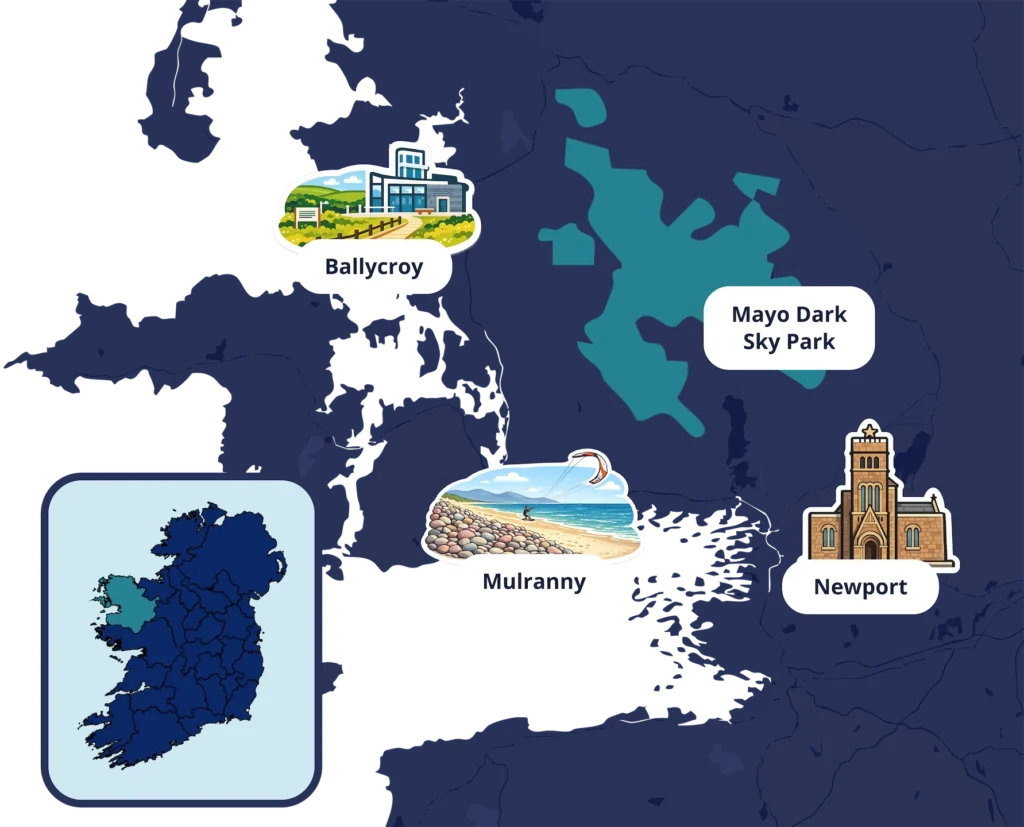
[Interactive Map Goes Here - Designed after subpages]

Plan Your Visit